Ingredient Intelligence
The Beauty
Dictionary.
Every ingredient we use — explained. Understand the science behind each molecule, its clinical evidence, and why it earned a place in our formulas.
Ingredient Intelligence
Every ingredient we use — explained. Understand the science behind each molecule, its clinical evidence, and why it earned a place in our formulas.
We don't formulate for the label. We formulate for results. Here's a closer look at the ingredients powering our formulas — and the clinical evidence behind them.
Click any ingredient to jump to its detailed profile, or scroll through to explore the full dictionary.
Barrier Restoration
Ceramides are lipid molecules naturally found in the skin's outermost layer — the stratum corneum. They make up roughly 50% of the skin barrier's intercellular lipids and act as the "mortar" between skin cells (the "bricks"), preventing moisture loss and blocking environmental irritants.
Lip skin is uniquely vulnerable — it has no sebaceous glands, a thinner stratum corneum, and is constantly exposed to the elements. Ceramide depletion leads to chronic dryness and cracking. Our ceramide complex replenishes these critical lipids, restoring the lip barrier's ability to retain moisture and defend itself.
Research consistently demonstrates that topical ceramide application improves barrier function, reduces transepidermal water loss (TEWL), and increases skin hydration. A landmark study in the Journal of Investigative Dermatology confirmed that ceramide-dominant formulations significantly accelerate barrier repair compared to ceramide-deficient controls.
Soothing & Nourishing
Rose extract (Rosa damascena or Rosa centifolia) is derived from rose petals and contains a rich profile of flavonoids, anthocyanins, and polyphenols. These bioactive compounds deliver antioxidant, anti-inflammatory, and mild antimicrobial properties.
Beyond its elegant, subtle aroma, rose extract provides genuine clinical benefit for compromised lip tissue. Its flavonoids help calm visible redness and irritation while delivering antioxidant protection against environmental stressors that contribute to lip aging and dryness.
Studies on Rosa damascena extract have demonstrated significant anti-inflammatory effects comparable to hydrocortisone in certain models of skin irritation. Research published in Complementary Therapies in Medicine has validated its skin-soothing properties, with polyphenol content shown to reduce oxidative stress markers in epidermal tissue.
Deep Hydration
Hyaluronic acid (HA) is a naturally occurring glycosaminoglycan found throughout the body's connective tissues. It is remarkable for its ability to hold up to 1,000 times its weight in water, making it one of nature's most powerful humectants.
Lips lack the sweat and sebaceous glands that help facial skin stay hydrated. HA compensates for this by drawing moisture from the air into the lip tissue, creating immediate plumping and sustained hydration. We use multiple molecular weights of HA for multi-depth hydration.
A robust body of clinical literature supports HA's efficacy. A randomized controlled trial in the Journal of Cosmetic Dermatology demonstrated that topical HA formulations significantly improved skin hydration (measured by corneometry) and reduced the appearance of fine lines within 8 weeks of consistent use. Low molecular weight HA has been shown to penetrate beyond the stratum corneum for deeper hydration.
Renewal & Recovery
Peptides are short chains of amino acids — the building blocks of proteins like collagen and elastin. Our peptide complex combines signal peptides (which stimulate repair processes) with carrier peptides (which deliver trace minerals essential for enzymatic functions in the skin).
Overnight is when your skin — including your lips — enters repair mode. Peptides support this natural restoration cycle by signaling fibroblasts to produce more collagen and helping to strengthen the delicate lip tissue. In the PM formula, they work synergistically with niacinamide for enhanced overnight renewal.
Palmitoyl pentapeptide-4 (Matrixyl) and copper tripeptide-1 are among the most studied cosmetic peptides. Clinical trials published in the International Journal of Cosmetic Science have shown that signal peptides can stimulate collagen Type I and Type IV synthesis, while copper peptides support wound healing and tissue remodeling at the cellular level.
Tone & Brightness
Licorice root extract (Glycyrrhiza glabra) contains glabridin, a potent flavonoid that inhibits tyrosinase — the enzyme responsible for melanin production. It also contains liquiritin, which helps disperse existing melanin deposits for a more even appearance.
Lips can develop uneven tone over time due to UV exposure, dehydration, and irritation. Licorice root provides a gentle, botanical approach to supporting an even, healthy-looking lip tone without the irritation that synthetic brightening agents can cause on delicate lip tissue.
Glabridin has been shown in multiple studies to be one of the most potent natural tyrosinase inhibitors, with efficacy comparable to kojic acid but with a superior safety profile. Research in the Journal of Agricultural and Food Chemistry confirmed its ability to inhibit UV-induced pigmentation without cytotoxicity to melanocytes — a crucial safety consideration.
Moisture Lock
Squalane is the stable, hydrogenated form of squalene — a lipid naturally produced by our own sebaceous glands. It is an exceptional emollient that mimics the skin's natural oils, providing weightless moisture without greasiness or comedogenicity.
Since lips have no sebaceous glands, they cannot produce their own squalene. This makes externally supplied squalane especially valuable. It creates a breathable occlusive layer that locks in hydration without the heavy, waxy feel of petrolatum-based balms, leaving lips feeling soft and cushiony — never greasy.
Squalane has been validated in dermatological research as a non-comedogenic, non-irritating moisturizer with exceptional skin compatibility. Studies demonstrate its ability to reduce TEWL by up to 30% while maintaining skin breathability — outperforming many heavier occlusives in user preference trials for comfort and texture.
Barrier & Tone
Niacinamide is the active form of Vitamin B3 and one of the most versatile molecules in skincare. It serves as a precursor to NAD(H) and NADP(H) — coenzymes essential for cellular energy production, DNA repair, and over 200 enzymatic reactions in the skin.
Niacinamide boosts ceramide synthesis in the skin — meaning it helps lips build their own barrier lipids. It also regulates melanosome transfer for a more even lip tone, and its anti-inflammatory properties help calm irritation. Few molecules can simultaneously address barrier, tone, and texture — niacinamide does all three.
Niacinamide is among the most extensively studied skincare ingredients. A pivotal study in the British Journal of Dermatology demonstrated that topical niacinamide significantly increased ceramide and free fatty acid levels while reducing TEWL. Multiple trials have confirmed its efficacy for improving the appearance of skin tone, texture, and barrier function at concentrations of 2–5% — the sweet spot we use in our formulations.
Discoloration Support
Tranexamic acid (TXA) is a synthetic derivative of the amino acid lysine, originally developed as a hemostatic agent. In skincare, it works by inhibiting the plasmin/plasminogen pathway — a key trigger for melanin production in response to UV exposure and inflammation.
TXA addresses discoloration through a mechanism completely different from tyrosinase inhibitors like licorice root. By blocking the plasmin pathway, it helps prevent the inflammatory signals that trigger excess melanin production — making it particularly effective for addressing uneven lip tone caused by chronic dryness and irritation.
A landmark randomized controlled trial in the Journal of Cosmetic Dermatology demonstrated that topical TXA at 2–3% concentration significantly improved the appearance of hyperpigmentation within 8–12 weeks, with results comparable to hydroquinone but without the associated irritation or cytotoxicity risks. It is now widely recognized as a first-line topical for addressing the look of uneven skin tone.
Our Approach
In an industry where trendy ingredients are often added in trace amounts just for label appeal, we take a different approach.
Every active ingredient is included at a concentration supported by peer-reviewed clinical literature — never diluted below efficacy thresholds just to claim inclusion on a label.
Ingredients are selected not in isolation but for how they work together — like niacinamide boosting ceramide synthesis, or licorice root and TXA targeting lip tone through complementary pathways.
Lip skin is fundamentally different from facial skin — thinner, more permeable, no sebaceous glands. Every ingredient is evaluated specifically for lip tissue safety, not just general dermatological safety.
We don't chase ingredient trends. If there isn't a compelling body of clinical evidence supporting an ingredient's efficacy and safety, it doesn't go into our formulas — period.
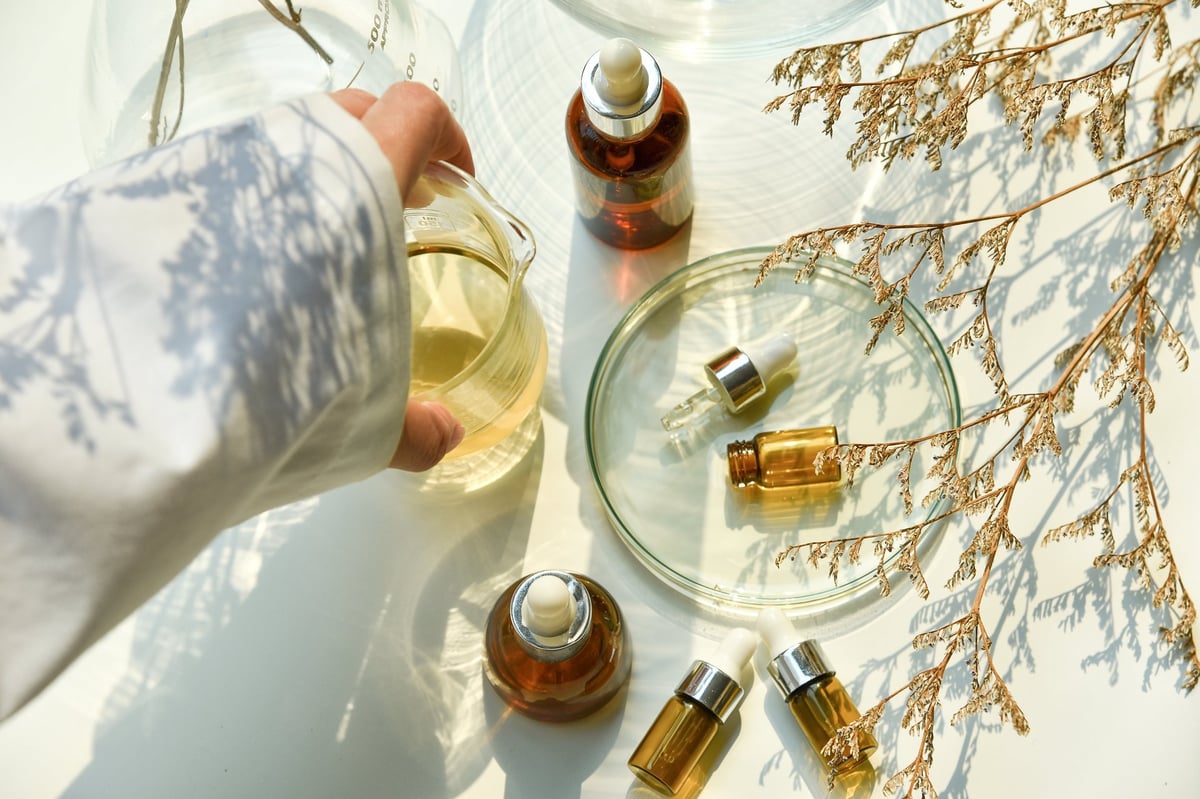
Every ingredient in our formulas was chosen for a reason — backed by research, validated by testing, and refined for the unique needs of lip skin.